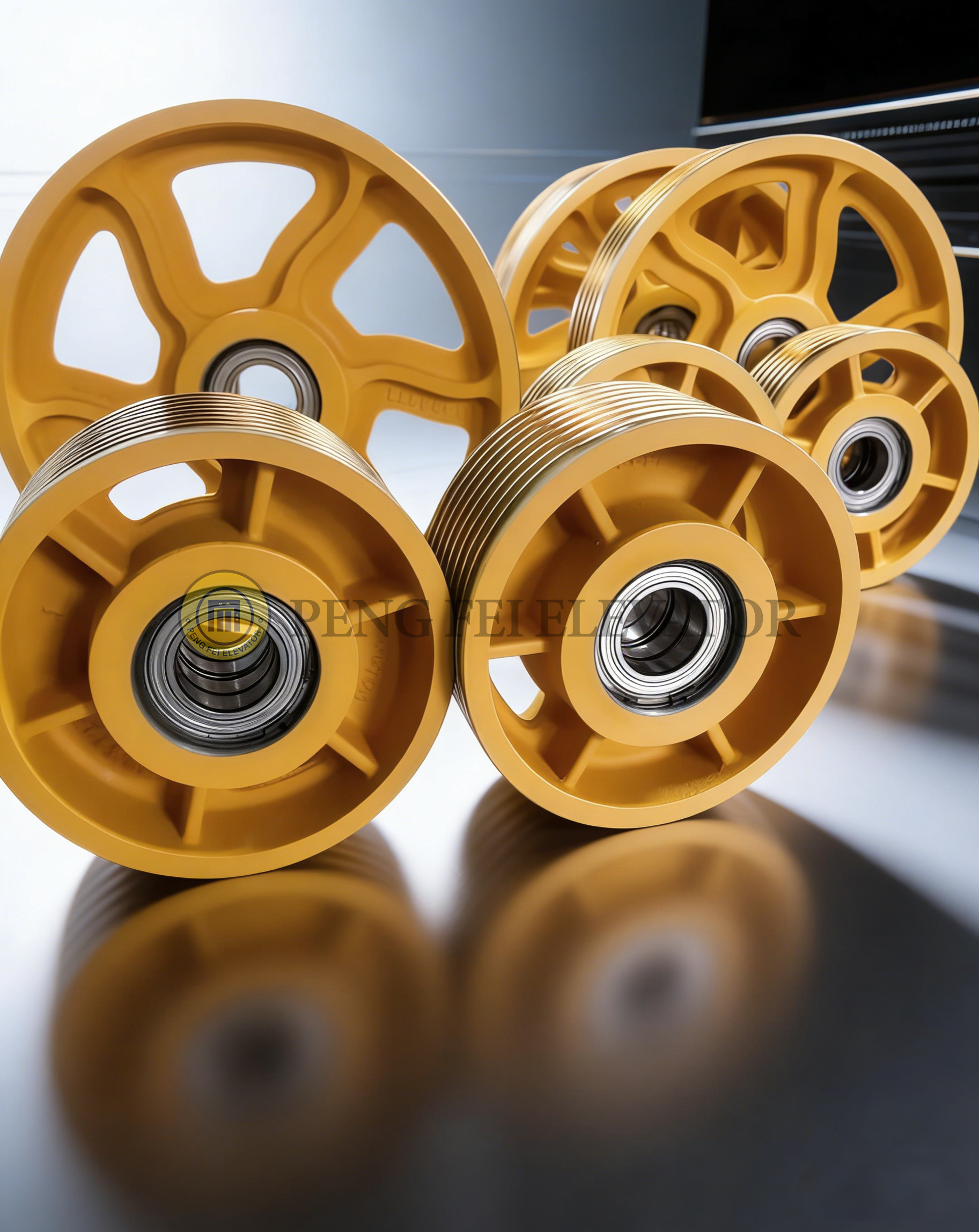
Elevator Door Hanger Roller Replacement: How to Choose the Right Roller
Elevator door hanger rollers are essential components of elevator door systems. They support and guide the movement of elevator doors, helping them open and close smoothly during daily operation. Over time, continuous movement, friction, dust, and mechanical wear can affect roller performance, resulting in increased noise, vibration, or irregular door movement.
When replacing elevator door hanger rollers, choosing the correct product is important for maintaining smooth operation and reducing maintenance costs. For elevator maintenance companies, contractors, and spare parts distributors, understanding the key specifications can help ensure accurate purchasing decisions.
- Identify the Original Elevator Door Hanger Roller Model
Before purchasing replacement rollers, buyers should identify the original product model and application.
Different elevator door systems may use different hanger roller structures. Rollers that appear similar may have differences in diameter, thickness, shaft design, and mounting configuration.
Important information to collect includes:
Original roller model or part number
Elevator manufacturer and door system model
Roller diameter and thickness
Shaft diameter and mounting structure
Product photographs and technical drawings
If the original part number is unavailable, providing clear photographs and accurate measurements can help suppliers identify a suitable replacement.
- Measure Roller Dimensions Accurately
Correct dimensions are essential for elevator door hanger roller replacement.
Even small dimensional differences may affect installation, alignment, and door movement. Before placing an order, buyers should verify the following measurements:
Outer Diameter: Determines the contact position between the roller and its running track.
Roller Width: Affects the contact area and compatibility with the hanger assembly.
Inner Diameter: Must match the shaft or bearing installation requirements.
Overall Thickness: Helps confirm whether the replacement fits the original mounting structure.
Buyers should also check the shaft length, bearing arrangement, and mounting hole dimensions where applicable.
Requesting a detailed technical drawing from the supplier is recommended before bulk purchasing.
- Check Bearing Quality and Material Selection
The bearing is one of the most important parts of an elevator door hanger roller.
A suitable bearing helps reduce friction and supports smooth rotation during repeated opening and closing cycles.
When evaluating roller quality, consider:
Bearing precision and rotation performance
Load capacity
Material strength
Wear resistance
Sealing and dust protection
Manufacturing consistency
Roller materials may include engineering plastics, nylon, polyurethane, or metal-based structures, depending on the specific design.
Different materials offer different characteristics in terms of noise reduction, wear resistance, and mechanical strength. The correct selection should follow the original equipment specifications and actual operating conditions.
- Evaluate Noise Reduction and Running Performance
Unusual noise during elevator door operation may indicate worn rollers, damaged bearings, poor alignment, or track contamination.
High-quality elevator door hanger rollers should provide stable rotation and suitable contact with the corresponding guide track.
When selecting replacements, buyers should consider the roller's surface finish, roundness, bearing smoothness, and dimensional consistency.
Proper installation and maintenance are equally important. Replacing a roller without checking the condition of the guide track or hanger assembly may not completely solve the original problem.
- Confirm Compatibility with the Door Hanger Assembly
Elevator door hanger rollers are not universal components.
Different door systems may have different hanger structures, roller arrangements, and track configurations. Therefore, buyers should confirm compatibility with the complete door hanger assembly.
Before ordering, check the mounting position, shaft connection, bearing structure, roller profile, and installation clearance.
For older elevator systems where original components are difficult to find, buyers can provide samples or technical drawings to help suppliers evaluate possible replacement options.
Never assume that a roller is interchangeable based only on its external appearance.
- Choose a Reliable Elevator Roller Supplier
Finding a reliable supplier is essential for long-term spare parts procurement.
Professional elevator spare parts suppliers should be able to provide accurate product specifications, dimensional drawings, quality inspection information, and technical assistance.
For international buyers, several additional factors should be considered:
Stable product quality and batch consistency
OEM and customized manufacturing capabilities
Competitive wholesale pricing
Flexible minimum order quantities
Production lead time
Export packaging and international shipping support
For distributors and maintenance contractors, working with a dependable supplier can help improve inventory management and reduce the risk of receiving incompatible components.
- Prepare Complete Information Before Purchasing
To improve purchasing efficiency, buyers should prepare the original roller model, required quantity, dimensions, application details, and destination information before requesting a quotation.
If possible, provide photographs from different angles and indicate the roller's installation position.
This allows suppliers to evaluate the product more accurately and provide a more suitable quotation.
For bulk orders, confirming a sample or technical drawing before mass production can further reduce procurement risks.
Conclusion
Elevator door hanger rollers play an important role in maintaining smooth and stable elevator door movement. Selecting the right replacement requires careful attention to dimensions, bearing quality, material characteristics, and compatibility with the original door hanger assembly.
By verifying technical specifications and working with an experienced elevator spare parts supplier, buyers can improve purchasing accuracy, reduce maintenance problems, and support long-term elevator operation.
Whether you are an elevator maintenance contractor, spare parts wholesaler, or international distributor, choosing reliable elevator door hanger rollers is an important part of an effective elevator maintenance strategy.
We offer various mechanical replacement parts for escalators and elevators. The products include escalator tooth plates, step frame strips, wear-resistant guide rail strips, step rollers, sprockets, driving rollers, driving friction wheels, driving shafts, gear assemblies, step chains, complete chain components, handrail belts, etc. In addition, we also provide elevator wire rope head assemblies, traction machine shock absorbers, car shock absorbers, sliding guide shoes, hollow guide rails, cast iron guide shoe shoes, traction wheels, guide wheels, buffers, etc. All wear-prone components suitable for electric escalators are compatible with mainstream elevator brands and are applicable for equipment maintenance, renovation projects, and new machine assembly. We offer OEM customization services and can handle large-scale orders as well as small-scale repair orders. Our products are of stable quality and the factory direct sales price has a significant advantage.