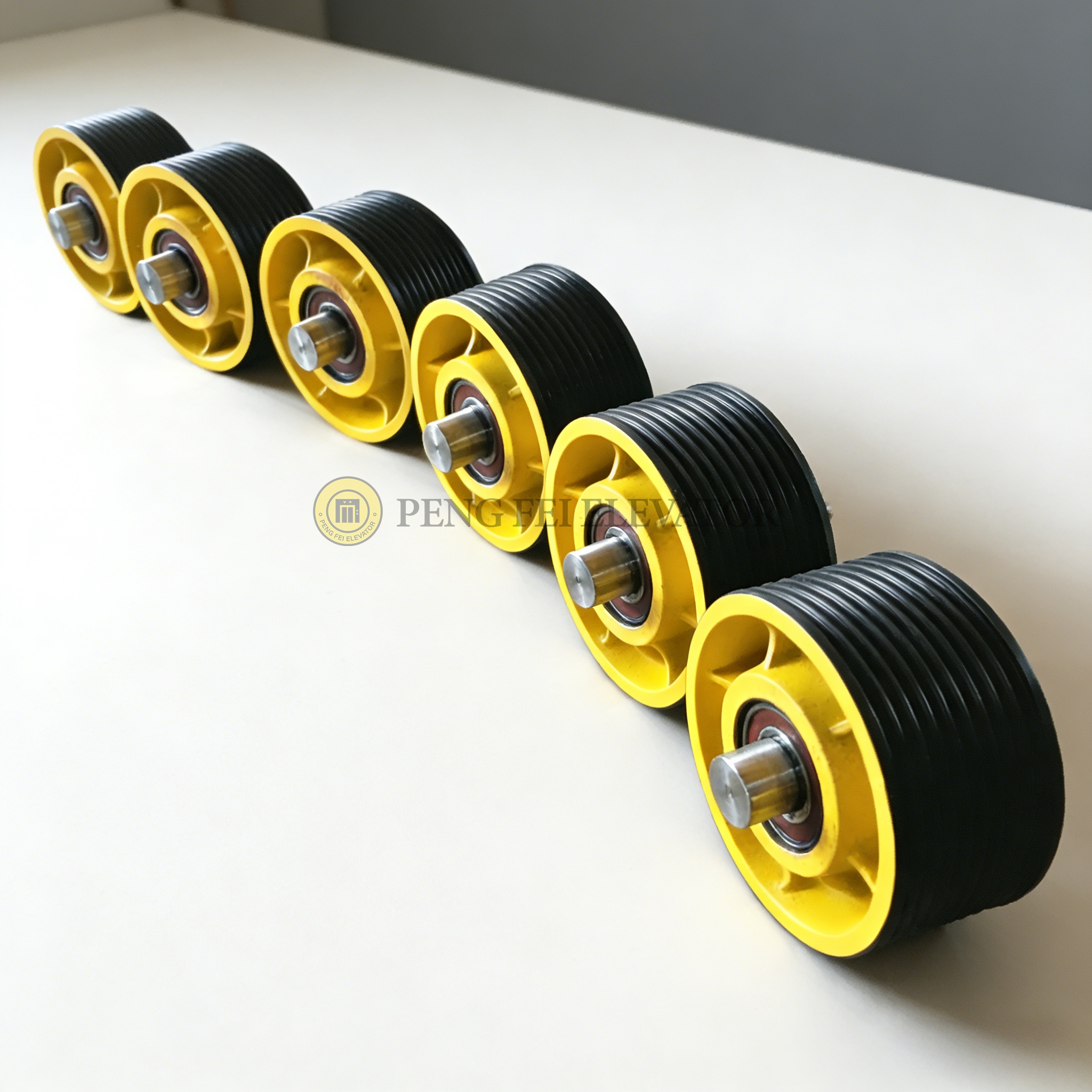
Elevator Traction Sheave: Types, Functions, and Selection Guide
The elevator traction sheave is one of the most important mechanical components in a traction elevator system. It transfers power from the traction machine to the elevator ropes, allowing the elevator car and counterweight to move smoothly between floors.
As a key load-bearing component, the quality and design of the traction sheave directly affect elevator performance, energy efficiency, operational stability, and maintenance costs.
Choosing a reliable elevator traction sheave manufacturer is essential for elevator manufacturers, maintenance companies, and spare parts distributors.
What Is an Elevator Traction Sheave?
An elevator traction sheave is a grooved wheel installed on the traction machine. The elevator ropes pass through the grooves of the sheave, and the friction between the ropes and grooves creates the traction force required to move the elevator.
Unlike traditional lifting systems, traction elevators use the balance between the elevator car and counterweight to reduce energy consumption and improve operating efficiency.
How Does an Elevator Traction Sheave Work?
The working principle of a traction sheave is based on friction and mechanical balance.
The process includes:
The traction motor drives the sheave to rotate.
The grooves on the sheave grip the elevator ropes.
The ropes move upward or downward according to the rotation direction.
The elevator car and counterweight move in opposite directions.
The elevator reaches the required floor smoothly.
The traction sheave must maintain proper contact with the ropes to ensure safe and efficient operation.
Types of Elevator Traction Sheaves
Single Wrap Traction Sheave
A single wrap traction sheave uses one contact point between the rope and sheave.
Features:
Simple structure
Easy installation
Suitable for standard elevator systems
Applications:
Passenger elevators
Small commercial elevators
Residential elevators
Double Wrap Traction Sheave
A double wrap traction sheave increases the rope contact angle to improve traction performance.
Features:
Higher traction capacity
Better load handling ability
Suitable for demanding applications
Applications:
High-rise buildings
Heavy-load elevators
High-speed elevator systems
Key Factors When Choosing a Traction Sheave
Rope Compatibility
The traction sheave must match the elevator rope diameter, material, and specifications.
Incorrect matching may cause:
Rope wear
Reduced traction
Increased maintenance costs
Groove Design
The groove shape directly affects traction performance.
Common groove types include:
U-shaped grooves
V-shaped grooves
Undercut grooves
The correct groove design improves safety and extends rope service life.
Material Quality
High-quality materials provide:
Better wear resistance
Higher mechanical strength
Longer service life
Cast iron and other durable materials are commonly used for traction sheaves.
Elevator Load and Speed
Different elevator applications require different traction sheave designs.
Factors include:
Rated load
Elevator speed
Building height
Operating frequency
Common Problems of Elevator Traction Sheaves
Excessive Groove Wear
Long-term operation may cause groove wear, resulting in reduced traction.
Possible effects:
Rope slipping
Uneven movement
Increased noise
Rope Damage
Incorrect groove design or worn sheaves may accelerate rope wear.
Regular inspection helps identify problems early.
Abnormal Noise and Vibration
Possible causes include:
Sheave imbalance
Poor installation
Bearing problems
Uneven wear
Importance of High-Quality Traction Sheaves
A reliable elevator traction sheave provides:
Smooth elevator operation
Improved energy efficiency
Reduced rope wear
Lower maintenance costs
Longer equipment lifespan
For elevator manufacturers and maintenance providers, selecting the right traction sheave is an important part of ensuring elevator safety and performance.
Why Choose PF Elevator Parts?
PF Elevator Parts specializes in manufacturing high-quality elevator components for global customers.
Our elevator traction sheaves feature:
Precision machining
Stable performance
Durable materials
Strict quality control
OEM and customized solutions
We provide reliable elevator spare parts for elevator manufacturers, distributors, and maintenance companies worldwide.
Frequently Asked Questions
What is the function of an elevator traction sheave?
The traction sheave transfers motor power to elevator ropes and enables the elevator car to move.
How often should a traction sheave be replaced?
Replacement depends on elevator usage, rope condition, maintenance frequency, and groove wear.
What materials are used for traction sheaves?
Most traction sheaves are made from high-strength cast iron or other durable materials.
Can a worn traction sheave damage elevator ropes?
Yes. Excessive groove wear can increase rope wear and reduce elevator performance.
How do I choose the right traction sheave?
Selection should consider elevator load, speed, rope specifications, groove design, and application requirements.
Conclusion
The elevator traction sheave is a critical component that directly affects elevator movement, safety, and efficiency. Understanding its structure, working principle, and selection factors helps ensure reliable elevator operation.
For high-quality elevator traction sheaves and other elevator components, PF Elevator Parts provides professional manufacturing solutions for customers worldwide.
Our company specializes in the R&D, manufacturing and sales of complete elevators of various types and a full range of core components for elevators and escalators. Our products cover a wide variety of elevator equipment, including high-end villa elevators, passenger elevators, freight elevators, dumbwaiters, etc. Core components for vertical elevators include main engine shock absorbers, car shock absorbers, guide shoes, rope hitches, traction sheaves, etc. Key escalator components include comb plates, side panels, friction wheels, drive wheels, step rollers, tension chains, heavy-duty step chains, pulley assemblies, etc. We can provide one-stop supporting solutions for major elevator and escalator brands at home and abroad.