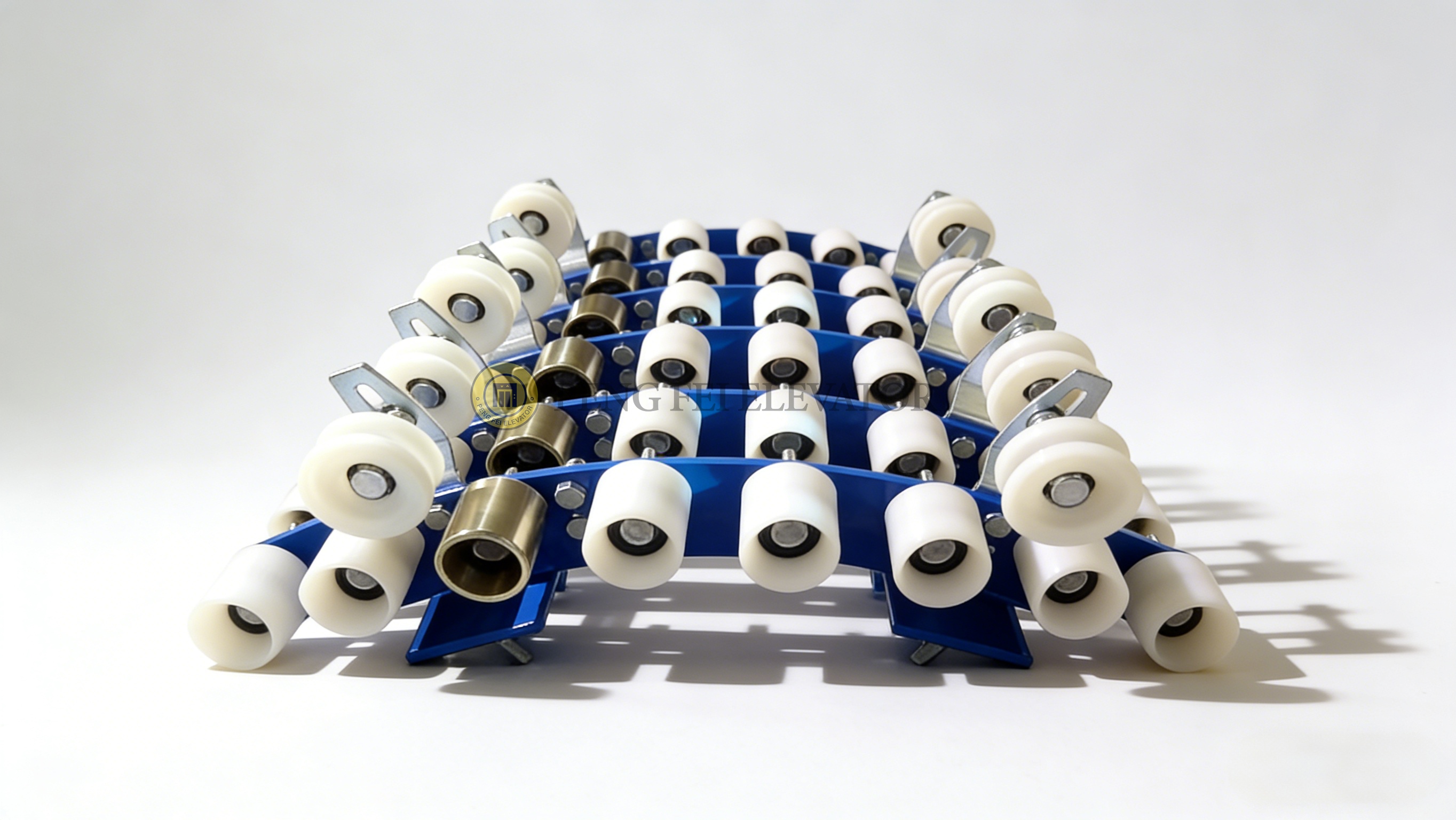
Elevator Guide Rails: Function, Types, and Importance in Elevator Systems
Elevator guide rails are one of the most important structural components in an elevator system. They ensure that the elevator cabin and counterweight move smoothly, safely, and accurately within the shaft.
Although guide rails are not always visible to passengers, they play a critical role in maintaining stability, ride comfort, and overall system safety.
For engineers, developers, and elevator buyers, understanding guide rail systems is essential when evaluating elevator quality and performance.
What Are Elevator Guide Rails?
Elevator guide rails are steel tracks installed vertically inside the elevator shaft.
They guide the movement of the elevator cabin and counterweight, ensuring that both travel in a controlled and aligned path.
Without guide rails, the elevator would not be able to maintain stable vertical movement.
Function of Elevator Guide Rails
Guide rails serve several key functions in an elevator system.
Ensure Stable Movement
They keep the elevator cabin aligned during upward and downward travel.
Improve Ride Comfort
Reduce vibration and swaying during operation.
Support Safety Systems
Provide a stable structure for safety devices such as emergency brakes.
Maintain Accurate Leveling
Help the elevator stop precisely at each floor.
Types of Elevator Guide Rails
Different types of guide rails are used depending on elevator application and load requirements.
T-Type Guide Rails
T-type guide rails are the most commonly used in modern elevator systems.
They are shaped like the letter “T” and provide strong structural support and smooth guiding performance.
These rails are widely used in passenger elevators and residential buildings.
Hollow Guide Rails
Hollow guide rails are lighter in weight and easier to install.
They are often used in low-rise buildings or light-duty elevator systems.
Although cost-effective, they may not be suitable for heavy-duty applications.
Solid Guide Rails
Solid guide rails offer higher strength and durability.
They are commonly used in high-rise buildings, freight elevators, and heavy-load systems.
Their robust structure ensures long-term stability and performance.
Importance of Guide Rail Installation Accuracy
Proper installation of guide rails is essential for elevator performance.
Even small deviations in alignment can affect ride quality, increase noise, and cause mechanical wear.
Professional installation ensures that rails are precisely aligned and securely fixed within the shaft.
Guide Rails and Elevator Safety
Guide rails are directly connected to elevator safety systems.
In emergency situations, safety devices such as the safety gear clamp onto the guide rails to stop the elevator cabin.
This makes guide rails a critical part of the overall safety structure.
Maintenance of Guide Rails
Regular inspection and maintenance of guide rails help ensure smooth operation.
Technicians check for wear, lubrication levels, alignment accuracy, and structural integrity.
Proper maintenance reduces friction and extends the lifespan of the elevator system.
Applications of Guide Rail Systems
Guide rails are used in all types of elevator systems, including residential buildings, commercial towers, hospitals, hotels, and industrial facilities.
Different applications require different rail specifications based on load capacity and building height.
Choosing the Right Guide Rail System
Selecting the appropriate guide rail depends on elevator type, load capacity, and building design.
High-rise and heavy-load systems require stronger rails with higher durability standards.
Working with an experienced elevator manufacturer ensures proper selection and installation.
Conclusion
Elevator guide rails are essential components that ensure safe, stable, and efficient elevator operation.
They support vertical movement, improve ride comfort, and play a critical role in safety systems.
If you are planning an elevator project and need professional guidance on elevator components and system design, contact us for expert support and customized solutions.
Our company specializes in the R&D, manufacturing and sales of complete elevators of various types and a full range of core components for elevators and escalators. Our products cover a wide variety of elevator equipment, including high-end villa elevators, passenger elevators, freight elevators, dumbwaiters, etc. Core components for vertical elevators include main engine shock absorbers, car shock absorbers, guide shoes, rope hitches, traction sheaves, etc. Key escalator components include comb plates, side panels, friction wheels, drive wheels, step rollers, tension chains, heavy-duty step chains, pulley assemblies, etc. We can provide one-stop supporting solutions for major elevator and escalator brands at home and abroad.