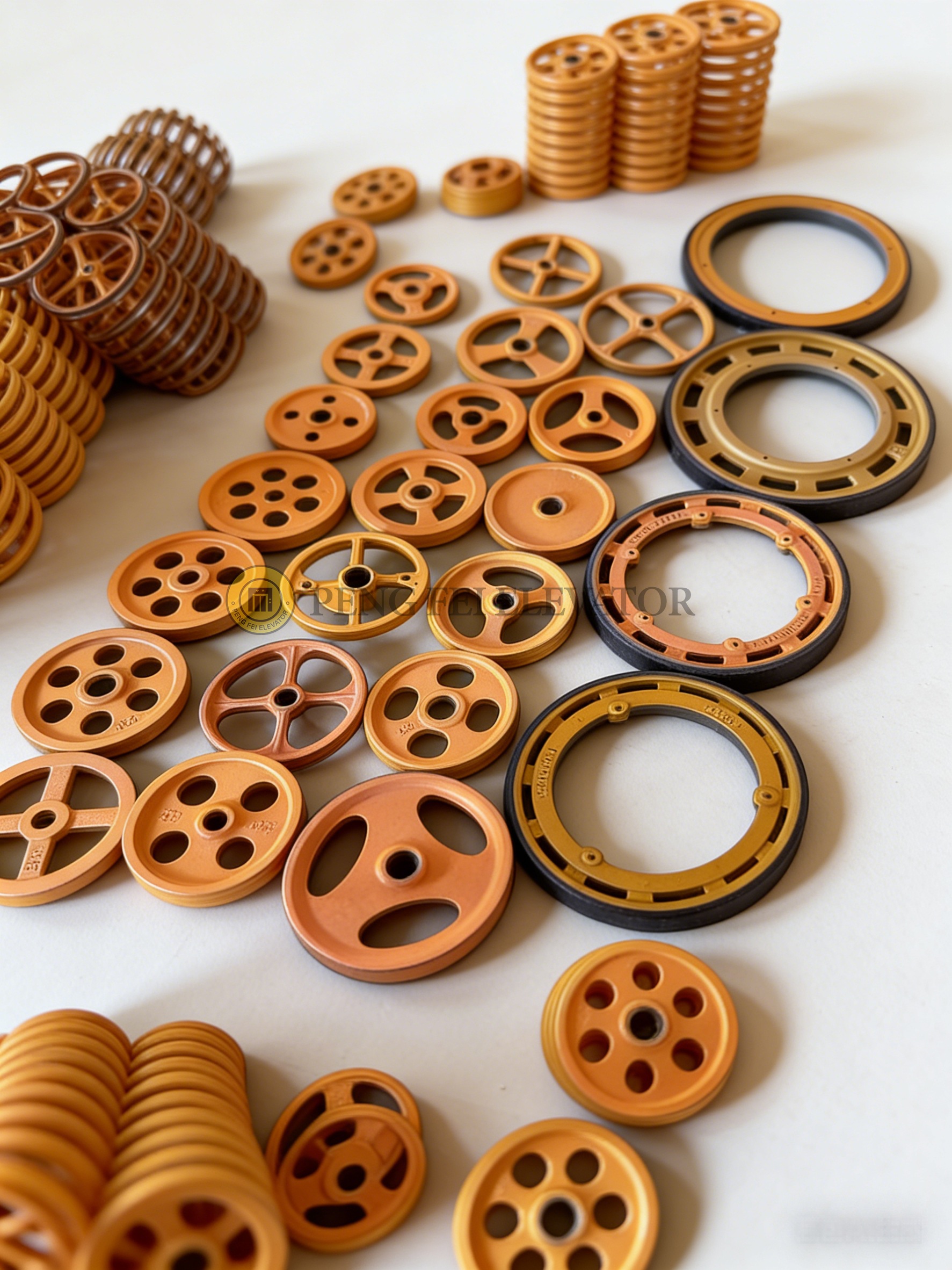
Elevator Safety Gear: Functions, Types, and Working Principle
Elevator safety gear is one of the most important safety devices in an elevator system. It is designed to stop the elevator car in case of overspeed, rope failure, or emergency conditions, ensuring passenger safety.
As a core mechanical safety system, safety gear plays a critical role in preventing accidents and protecting both passengers and equipment.
What Is Elevator Safety Gear?
Elevator safety gear is a mechanical device installed on the elevator car frame. It works together with the speed governor to clamp the guide rails when the elevator exceeds its rated speed.
Once activated, it creates strong friction on the guide rails and brings the elevator car to a controlled stop.
How Elevator Safety Gear Works
The working process can be described in three steps:
The speed governor detects overspeed conditions
The governor triggers the safety gear mechanism
The safety gear clamps the guide rails and stops the elevator car
This system ensures emergency braking even if the traction system fails.
Types of Elevator Safety Gear
Instantaneous Safety Gear
Instantaneous safety gear stops the elevator immediately when triggered.
Features:
Quick response
High braking force
Used for low-speed elevators
Applications:
Residential buildings
Low-rise buildings
Freight elevators
Progressive Safety Gear
Progressive safety gear provides a gradual and controlled stopping process.
Features:
Smooth deceleration
Reduced shock impact
Suitable for high-speed elevators
Applications:
High-rise buildings
Commercial buildings
Hotels and hospitals
Key Functions of Elevator Safety Gear
Emergency stopping of elevator car
Prevents free fall accidents
Protects passengers and equipment
Works with governor system
Ensures compliance with safety standards
How to Choose the Right Safety Gear
Elevator Speed
High-speed elevators require progressive safety gear, while low-speed systems may use instantaneous types.
Load Capacity
The safety gear must match the elevator’s rated load and braking force requirements.
Guide Rail Type
Different rail profiles require compatible safety gear designs.
Safety Standards
Ensure compliance with international elevator safety regulations.
Common Problems of Safety Gear
Wear of Friction Parts
Long-term use may cause surface wear, affecting braking efficiency.
Misalignment
Improper installation can reduce clamping performance.
Delayed Activation
Governor system issues may affect response timing.
Regular inspection and maintenance are essential.
Importance of Elevator Safety Gear
Elevator safety gear is a critical life-saving component. It ensures:
Emergency protection during system failure
Passenger safety in overspeed conditions
Stability of elevator operation
Compliance with international safety codes
Without safety gear, elevator systems cannot be considered safe.
Why Choose PF Elevator Parts?
PF Elevator Parts manufactures high-quality elevator safety gear for global elevator systems.
Our advantages include:
Precision engineering
High-strength materials
Reliable braking performance
Long service life
OEM & ODM customization
We support elevator manufacturers, maintenance companies, and distributors worldwide.
Conclusion
Elevator safety gear is a vital safety system that ensures emergency protection and stable operation. Understanding its working principle and selecting the correct type is essential for elevator safety and reliability.
For high-quality elevator safety gear solutions, PF Elevator Parts provides professional manufacturing and global supply support.
Our company specializes in the R&D, manufacturing and sales of complete elevators of various types and a full range of core components for elevators and escalators. Our products cover a wide variety of elevator equipment, including high-end villa elevators, passenger elevators, freight elevators, dumbwaiters, etc. Core components for vertical elevators include main engine shock absorbers, car shock absorbers, guide shoes, rope hitches, traction sheaves, etc. Key escalator components include comb plates, side panels, friction wheels, drive wheels, step rollers, tension chains, heavy-duty step chains, pulley assemblies, etc. We can provide one-stop supporting solutions for major elevator and escalator brands at home and abroad.