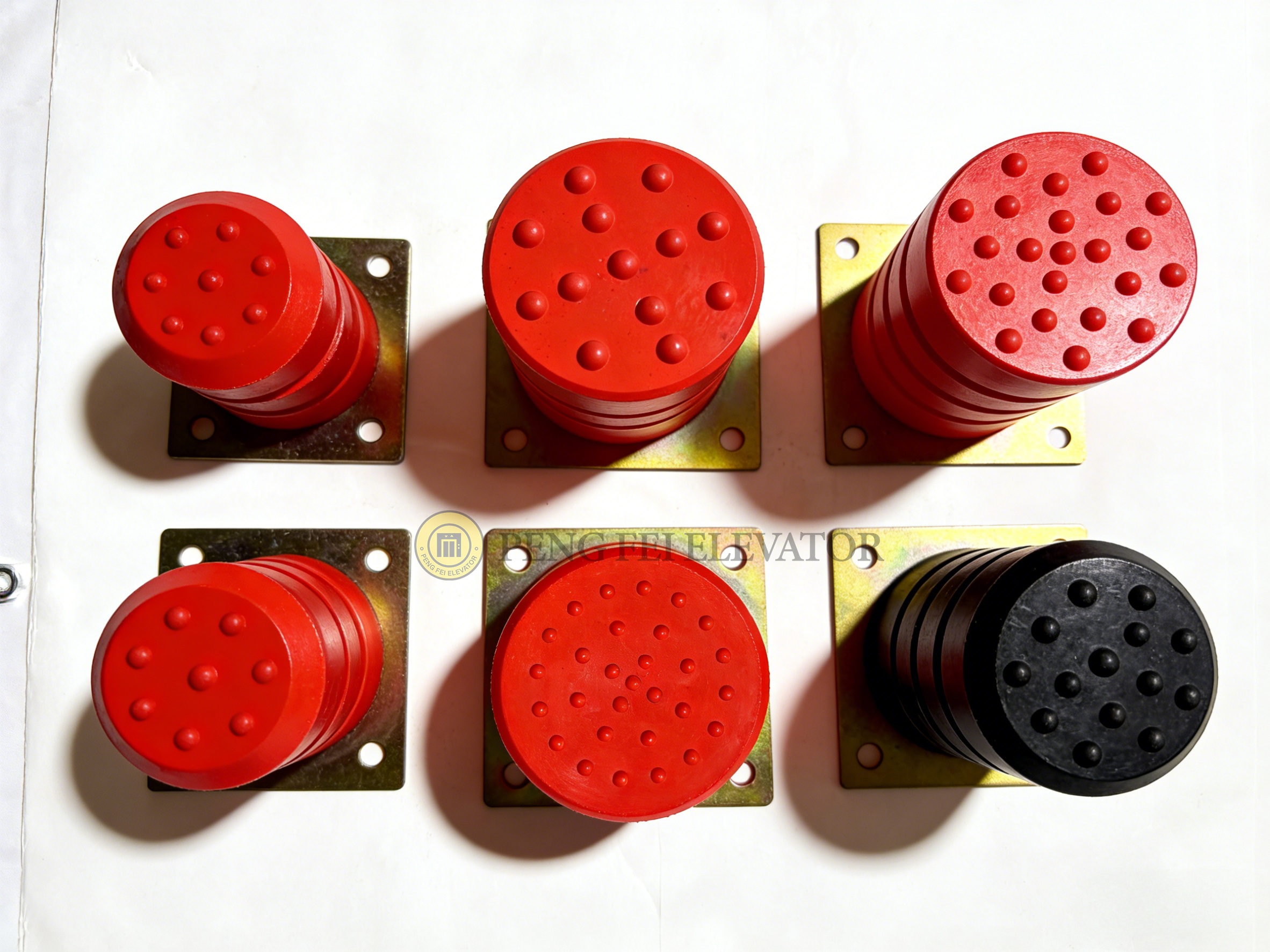
Elevator Buffer: Types, Functions, and How to Choose the Right Buffer
The elevator buffer is a critical safety component installed at the bottom of the elevator shaft. It is designed to absorb impact energy and prevent damage when an elevator car or counterweight exceeds its normal travel limit.
Although it is often hidden and not frequently noticed, the buffer plays an essential role in protecting passengers, equipment, and the entire elevator system.
What Is an Elevator Buffer?
An elevator buffer is a safety device installed in the pit of the elevator shaft. Its main function is to absorb and reduce impact force if the elevator car or counterweight moves beyond its lowest stopping point.
Buffers act as the final line of defense in elevator safety systems.
Main Functions of Elevator Buffer
The elevator buffer provides several key functions:
Absorbs impact energy during emergency situations
Prevents structural damage to elevator components
Protects passengers from severe impact forces
Enhances overall elevator safety system reliability
Reduces maintenance costs caused by collisions
Types of Elevator Buffer
Oil Buffer (Hydraulic Buffer)
Oil buffers use hydraulic oil to absorb impact energy.
Features:
Suitable for high-speed elevators
Strong energy absorption capacity
Smooth deceleration performance
Applications:
Commercial buildings
High-rise buildings
Hotels and office towers
Spring Buffer
Spring buffers rely on mechanical spring compression to absorb impact.
Features:
Simple structure
Low cost
Easy installation and maintenance
Applications:
Low-speed elevators
Residential buildings
Freight elevators
How to Choose the Right Elevator Buffer
Elevator Speed
High-speed elevators require oil buffers, while low-speed elevators can use spring buffers.
Load Capacity
The buffer must match the elevator’s rated load and kinetic energy requirements.
Installation Position
Different buffer types are used for car side and counterweight side.
Building Type
Commercial buildings generally require higher-performance buffers compared to residential systems.
Safety Standards
Always ensure compliance with international elevator safety standards.
Common Buffer Problems
Oil Leakage
May occur in hydraulic buffers due to seal aging or damage.
Weak Compression
Spring fatigue can reduce buffer performance over time.
Improper Installation
Incorrect positioning may reduce safety effectiveness.
Regular inspection is necessary to ensure safe operation.
Why Elevator Buffer Is Important
A high-quality elevator buffer ensures:
Safer emergency stopping
Reduced mechanical damage
Longer elevator system lifespan
Improved passenger safety
Compliance with safety regulations
It is one of the most important passive safety components in an elevator system.
Why Choose PF Elevator Parts?
PF Elevator Parts provides high-quality elevator buffers designed for global elevator systems.
Our products feature:
Stable hydraulic performance
High-strength spring materials
Long service life
Strict quality control
OEM and ODM support
We supply elevator components to maintenance companies, distributors, and elevator manufacturers worldwide.
Conclusion
Elevator buffers are essential safety components that protect both passengers and equipment in emergency situations. Understanding the different types and selecting the right buffer ensures safer and more reliable elevator operation.
For reliable elevator buffer solutions, choosing a professional manufacturer is always the key to long-term safety and performance.
Our company specializes in the R&D, manufacturing and sales of complete elevators of various types and a full range of core components for elevators and escalators. Our products cover a wide variety of elevator equipment, including high-end villa elevators, passenger elevators, freight elevators, dumbwaiters, etc. Core components for vertical elevators include main engine shock absorbers, car shock absorbers, guide shoes, rope hitches, traction sheaves, etc. Key escalator components include comb plates, side panels, friction wheels, drive wheels, step rollers, tension chains, heavy-duty step chains, pulley assemblies, etc. We can provide one-stop supporting solutions for major elevator and escalator brands at home and abroad.