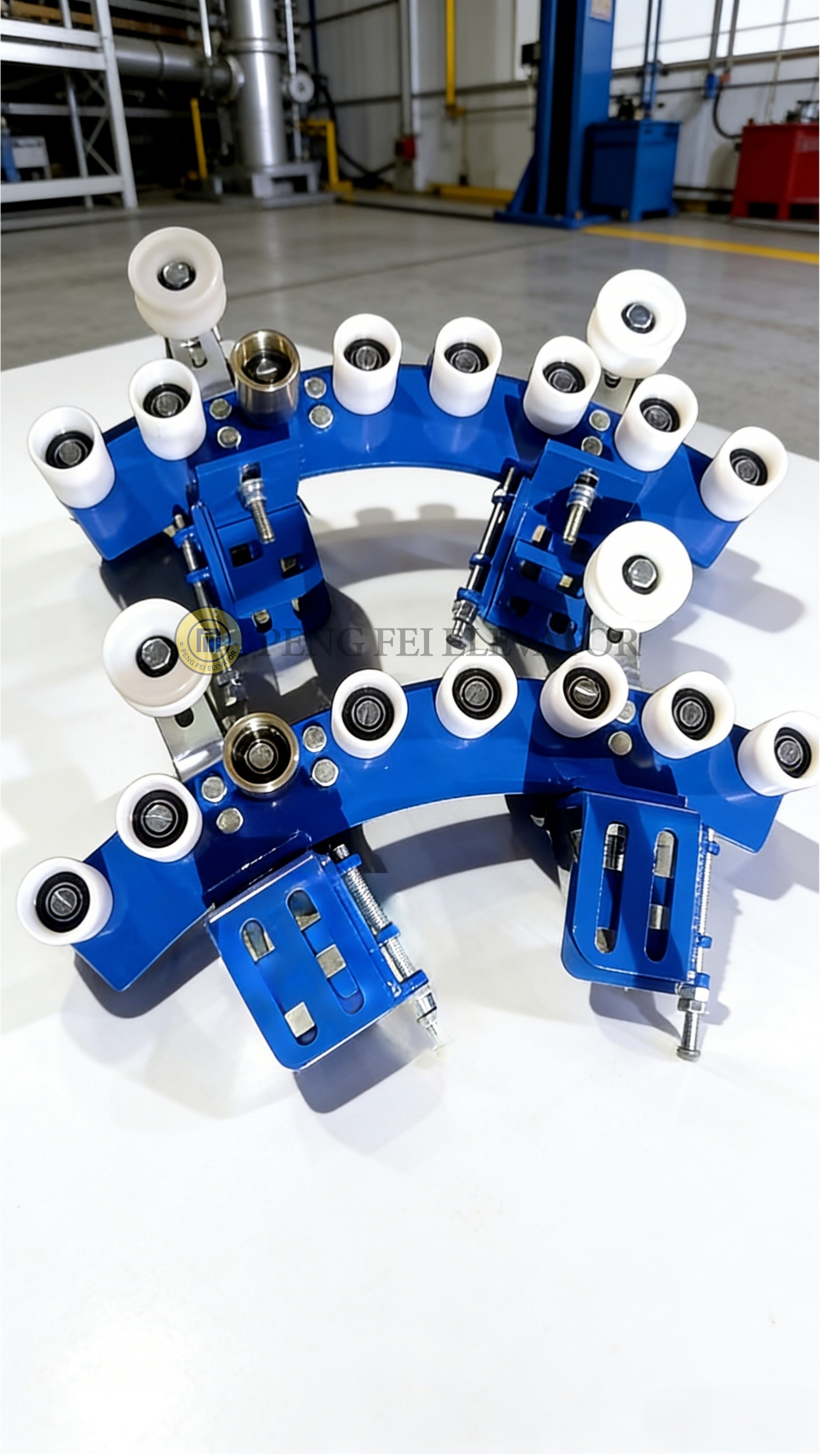
Common Types of Elevator Traction Wheels
Elevator traction wheels are essential components in traction elevator systems. These wheels are responsible for transferring power from the elevator motor to the steel wire ropes that move the elevator car and counterweight. Over the years, engineers have developed several types of traction wheels to suit different elevator designs and operational requirements.
One of the most widely used types is the standard traction sheave, which is commonly found in passenger elevators. These wheels are designed with multiple rope grooves and are typically made from high-strength cast iron. The grooves provide the friction required to move the elevator car smoothly and efficiently.
Another type is the high-speed traction wheel, used in elevators that operate at higher speeds, such as those in tall office buildings or skyscrapers. These wheels often have larger diameters to reduce bending stress on the ropes. Larger diameters allow the ropes to move more smoothly and reduce mechanical wear.
Freight elevators often use heavy-duty traction wheels. These wheels are designed to support heavier loads and operate under more demanding conditions. They are usually made from stronger materials such as alloy steel and may feature reinforced structures to handle higher stress levels.
In machine-room-less (MRL) elevators, compact traction wheels are often used. Because MRL elevators are designed with limited space, the traction wheels must be smaller while still maintaining sufficient traction performance. Engineers optimize groove design and material strength to ensure reliable operation in these compact systems.
Another important variation is the coated traction wheel. Some manufacturers apply special coatings to the wheel surface to improve wear resistance or modify friction characteristics. These coatings can extend the lifespan of both the wheel and the wire ropes.
The number of grooves on a traction wheel also varies depending on the elevator system. Some elevators use four or five ropes, while others may use six or more. Each rope requires its own groove, and the spacing between grooves must be precisely engineered to maintain balanced load distribution.
Material selection remains an important factor across all traction wheel types. Cast iron continues to be widely used due to its excellent vibration damping and wear resistance. However, modern elevators increasingly use alloy materials to achieve higher strength and durability.
Choosing the correct traction wheel type is essential for ensuring efficient elevator performance. Engineers must consider factors such as elevator speed, load capacity, rope type, and available installation space.
As elevator technology evolves, manufacturers continue to develop new traction wheel designs that improve efficiency, durability, and energy performance. These innovations help ensure that modern elevators remain reliable even under heavy usage conditions.
Our company specializes in the R&D, manufacturing and sales of complete elevators of various types and a full range of core components for elevators and escalators. Our products cover a wide variety of elevator equipment, including high-end villa elevators, passenger elevators, freight elevators, dumbwaiters, etc. Core components for vertical elevators include main engine shock absorbers, car shock absorbers, guide shoes, rope hitches, traction sheaves, etc. Key escalator components include comb plates, side panels, friction wheels, drive wheels, step rollers, tension chains, heavy-duty step chains, pulley assemblies, etc. We can provide one-stop supporting solutions for major elevator and escalator brands at home and abroad.