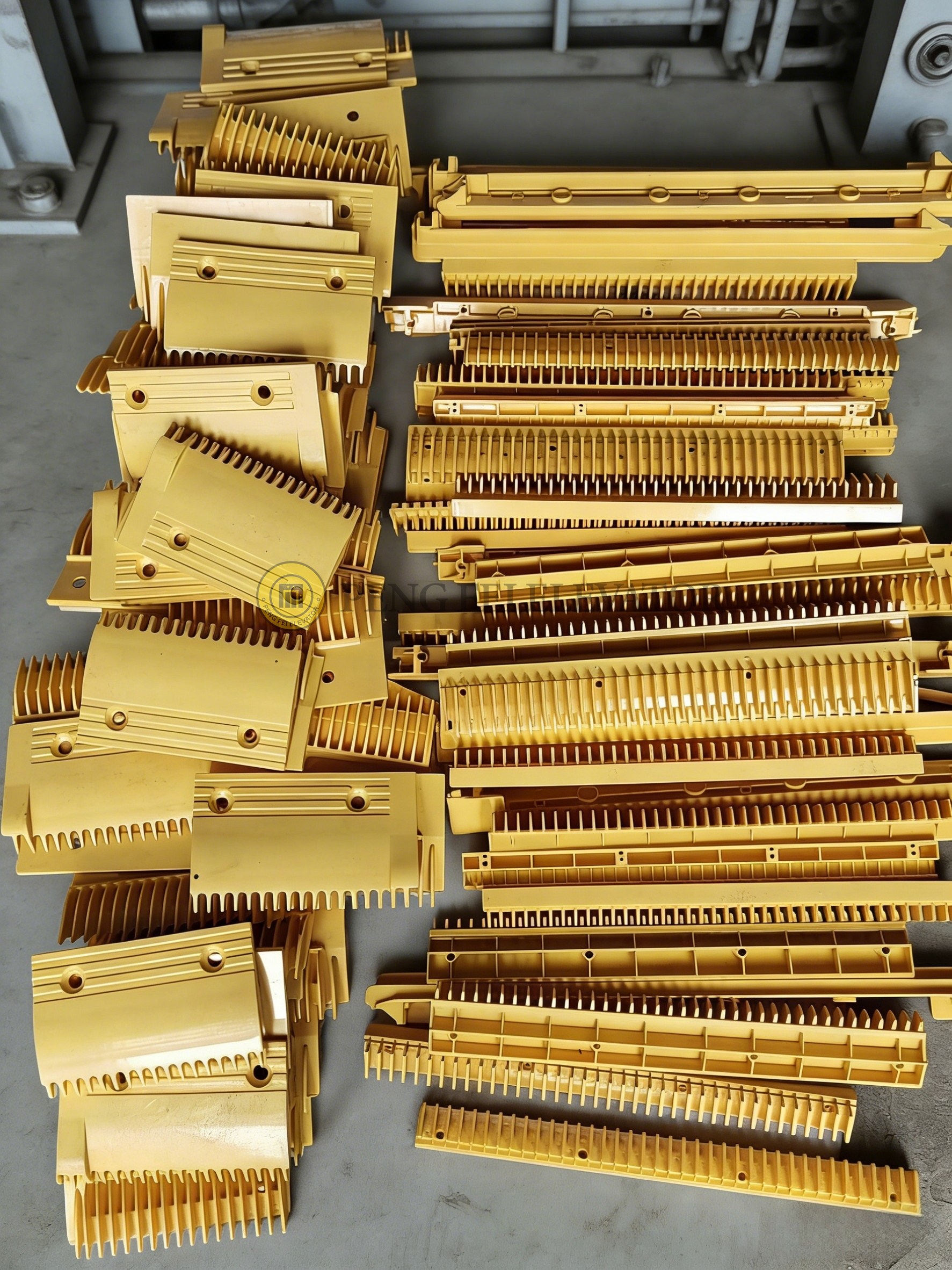
Plastic Comb Plates: Ensuring Safety and Smooth Operation in Elevators
The plastic comb plate is an essential safety component installed at the interface between the elevator car and the landing floor. Its primary role is to prevent passengers from accidentally getting their shoes, clothing, or other objects caught between the moving step and the stationary landing. Although a small part of the elevator system, the comb plate plays a crucial role in maintaining the safety and smooth operation of elevators in both residential and commercial buildings.
Material and Construction
Plastic comb plates are typically made from high-quality, reinforced polymers that combine strength, durability, and slight flexibility. This material choice allows the comb plate to absorb minor impacts without cracking or breaking, ensuring it can endure thousands of elevator cycles over many years. The lightweight nature of plastic also reduces stress on the elevator step and supporting structures, contributing to the longevity of the elevator system.
The teeth of the plastic comb plate are designed to interlock precisely with the grooves of the elevator step. This design creates a seamless interface that prevents objects from slipping through the gaps. Many plastic comb plates feature slightly tapered or rounded edges to reduce wear on shoes and other objects, while still maintaining the safety function. Advanced plastic formulations may also include additives that enhance resistance to UV light, chemical exposure, or extreme temperatures, making the comb plates suitable for a variety of environments.
Function and Importance
The comb plate acts as a protective barrier, shielding passengers from potential hazards. If the teeth of the comb plate are worn, broken, or misaligned, the gap between the moving step and the landing can increase, creating a risk of injury. Properly functioning comb plates also help maintain the smooth operation of the elevator by ensuring consistent contact with the step, which reduces noise, vibration, and mechanical stress.
Beyond safety, comb plates contribute to overall elevator efficiency. A well-aligned and properly designed plastic comb plate reduces friction between the moving step and the stationary landing, allowing the elevator to operate quietly and smoothly. This is particularly important in high-traffic buildings, where elevators are in near-constant use.
Installation and Alignment
Installing a plastic comb plate requires precision. Technicians must ensure the teeth align perfectly with the elevator step to prevent gaps or uneven contact. Most plastic comb plates come with pre-drilled holes or integrated clips for secure mounting, simplifying the installation process. However, careful measurement and alignment are crucial to avoid operational issues or premature wear.
Some installations may involve adjustable mounting brackets that allow fine-tuning of the comb plate position. This feature ensures a snug fit between the step and landing, which enhances safety and reduces mechanical noise. Technicians should also verify that the comb plate does not interfere with other elevator components, such as side guides or step edges.
Maintenance and Inspection
While plastic comb plates are durable, routine maintenance is essential. Regular inspections should check for cracks, chips, or wear on the teeth. Any damage can compromise passenger safety and may require immediate replacement. Cleaning is also necessary, as dust, debris, or small objects can accumulate between the teeth, potentially causing friction or minor step misalignment.
Because plastic comb plates are lightweight, replacement is typically quick and cost-effective. Lubrication is generally unnecessary, but care should be taken if lubricants are applied to surrounding metal parts, as some oils may degrade the plastic over time. Technicians should also ensure that replacement comb plates match the original specifications for thickness, tooth spacing, and material grade.
Applications and Benefits
Plastic comb plates are widely used in residential, commercial, and high-traffic elevators. Their lightweight and flexible design makes them ideal for elevators that operate frequently or in environments with variable humidity or temperature. Plastic comb plates are also cost-effective compared to metal alternatives, providing reliable safety without significant installation or maintenance costs.
By choosing high-quality plastic comb plates, building managers and elevator operators can improve passenger safety, reduce maintenance downtime, and extend the overall life of the elevator system. The combination of durability, flexibility, ease of installation, and low maintenance makes plastic comb plates an indispensable part of modern elevator design.
Conclusion
Though often overlooked, the plastic comb plate plays a critical role in elevator safety and performance. From preventing accidents to ensuring smooth operation and reducing wear on other components, it is a small part with a significant impact. High-quality material, precise installation, and regular maintenance are key factors in maximizing the benefits of plastic comb plates in elevators of all types.
Our company specializes in the R&D, manufacturing and sales of complete elevators of various types and a full range of core components for elevators and escalators. Our products cover a wide variety of elevator equipment, including high-end villa elevators, passenger elevators, freight elevators, dumbwaiters, etc. Core components for vertical elevators include main engine shock absorbers, car shock absorbers, guide shoes, rope hitches, traction sheaves, etc. Key escalator components include comb plates, side panels, friction wheels, drive wheels, step rollers, tension chains, heavy-duty step chains, pulley assemblies, etc. We can provide one-stop supporting solutions for major elevator and escalator brands at home and abroad.