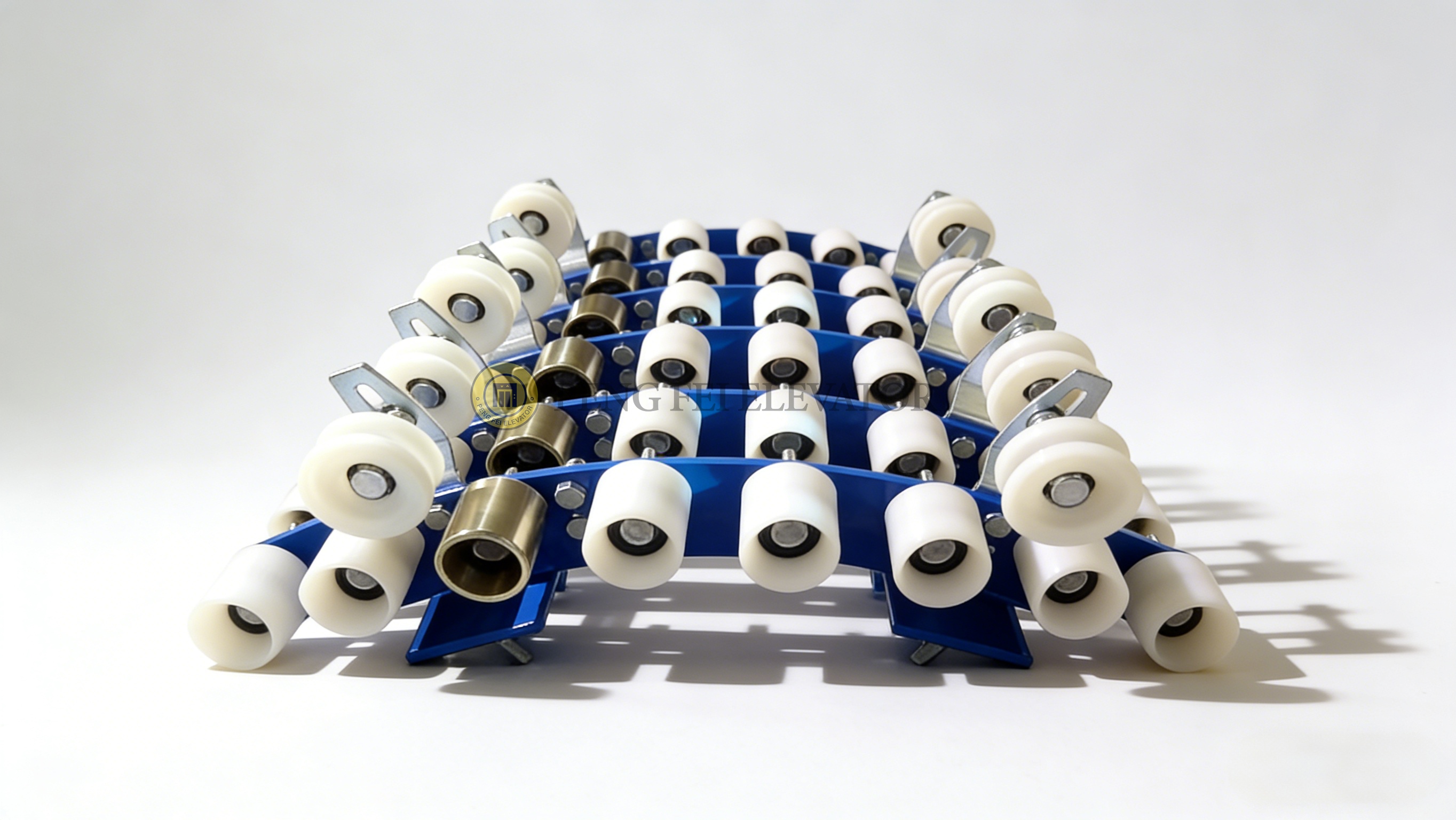
The Role of Elevator Rail Clips in Elevator Guide Rail Systems
The elevator rail clip is a small but essential component used to secure elevator guide rails to the building structure. In every elevator installation, guide rails provide the vertical path along which the elevator car and counterweight travel. Without proper rail fixation, the guide rails could shift or vibrate, affecting both the safety and stability of the elevator system. Rail clips are designed to firmly connect the guide rails to the supporting brackets installed along the elevator shaft.
Guide rails are typically mounted to the elevator shaft wall using a combination of brackets, bolts, and rail clips. The rail clip presses the guide rail tightly against the bracket, preventing lateral movement and ensuring that the rail remains perfectly aligned along the vertical shaft. Even a small deviation in rail alignment could cause vibration, noise, or excessive wear on the guide shoes attached to the elevator car.
In modern elevator systems, rail clips must be engineered with high precision to ensure long-term structural stability. Elevators operate continuously, and the forces generated during acceleration, deceleration, and passenger loading can place significant stress on the guide rail system. Rail clips distribute these forces and keep the rails securely fixed in place.
Material strength is an important factor in rail clip design. Most elevator rail clips are manufactured from high-strength steel to ensure they can withstand heavy loads and long-term mechanical stress. Surface treatments such as galvanization or protective coatings are often applied to prevent corrosion, particularly in environments where humidity or temperature fluctuations may affect metal components.
Proper installation of rail clips is also critical. During elevator construction, technicians carefully position the rail brackets and then attach the guide rails using precisely aligned rail clips. Tightening torque must be controlled to ensure that the rail is held securely without damaging the rail surface.
Maintenance personnel also inspect rail clips during routine elevator servicing. Over time, bolts may loosen or structural movement within the building may affect rail alignment. Periodic inspection ensures that rail clips remain properly secured and continue to perform their structural support function.
Although rail clips are relatively small compared with major elevator components, they play a fundamental role in maintaining the stability and safety of the elevator guide rail system. Reliable rail clip installation ensures that the elevator car moves smoothly and accurately within the shaft.
Our company specializes in the R&D, manufacturing and sales of complete elevators of various types and a full range of core components for elevators and escalators. Our products cover a wide variety of elevator equipment, including high-end villa elevators, passenger elevators, freight elevators, dumbwaiters, etc. Core components for vertical elevators include main engine shock absorbers, car shock absorbers, guide shoes, rope hitches, traction sheaves, etc. Key escalator components include comb plates, side panels, friction wheels, drive wheels, step rollers, tension chains, heavy-duty step chains, pulley assemblies, etc. We can provide one-stop supporting solutions for major elevator and escalator brands at home and abroad.