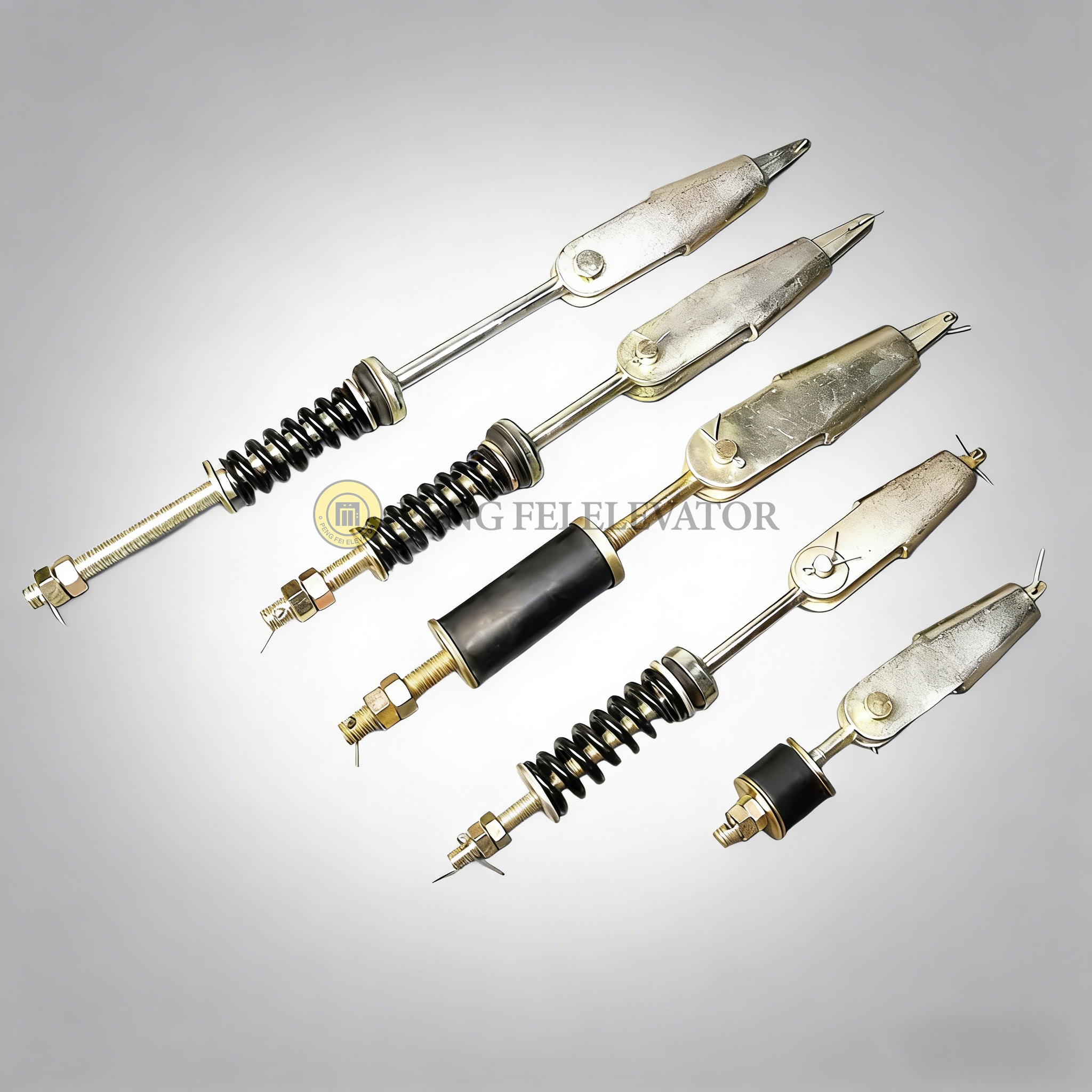
Energy Absorption Principles of Elevator Buffers in Safety Systems
Elevator safety systems rely on multiple layers of protection to ensure reliable operation. Among these safety devices, the elevator buffer serves as the final energy-absorbing mechanism designed to protect passengers and elevator equipment in the unlikely event of uncontrolled downward movement.
The fundamental concept behind elevator buffer design is energy absorption. When an elevator car travels downward, it carries kinetic energy determined by its mass and velocity. If the elevator reaches the bottom of the shaft unexpectedly, this energy must be safely dissipated to prevent structural damage or dangerous impact forces.
Elevator buffers are engineered to convert this kinetic energy into other forms of energy such as mechanical compression, hydraulic resistance, and heat. By gradually absorbing the energy, the buffer slows the elevator car in a controlled manner.
Hydraulic buffers are particularly effective in this process. Inside a hydraulic buffer, a piston moves through oil within a sealed cylinder. As the piston descends, the oil is forced through narrow channels that restrict its flow. This restriction creates resistance that slows the piston movement and therefore slows the elevator car. The energy generated by the moving elevator is converted into heat through hydraulic friction.
Spring buffers operate differently but follow the same fundamental principle. When the elevator car contacts the buffer, the spring compresses and stores energy in the form of elastic potential energy. As the spring returns to its original position, the stored energy is gradually released.
The efficiency of energy absorption depends on the buffer’s design parameters. Engineers must calculate the maximum potential energy generated by the elevator under full load conditions and ensure that the buffer capacity exceeds this value. Safety margins are incorporated to account for variations in operating conditions.
Modern elevator safety standards specify strict performance requirements for buffer systems. These regulations ensure that buffers can safely absorb energy generated by elevators operating at various speeds and loads. Manufacturers conduct extensive testing to verify that their buffers meet these standards before installation.
Energy absorption technology continues to evolve as elevators become faster and buildings grow taller. Improved hydraulic designs, advanced materials, and more precise manufacturing techniques are helping elevator buffers deliver higher energy absorption capacity while maintaining compact sizes suitable for modern elevator shafts.
Our company specializes in the R&D, manufacturing and sales of complete elevators of various types and a full range of core components for elevators and escalators. Our products cover a wide variety of elevator equipment, including high-end villa elevators, passenger elevators, freight elevators, dumbwaiters, etc. Core components for vertical elevators include main engine shock absorbers, car shock absorbers, guide shoes, rope hitches, traction sheaves, etc. Key escalator components include comb plates, side panels, friction wheels, drive wheels, step rollers, tension chains, heavy-duty step chains, pulley assemblies, etc. We can provide one-stop supporting solutions for major elevator and escalator brands at home and abroad.