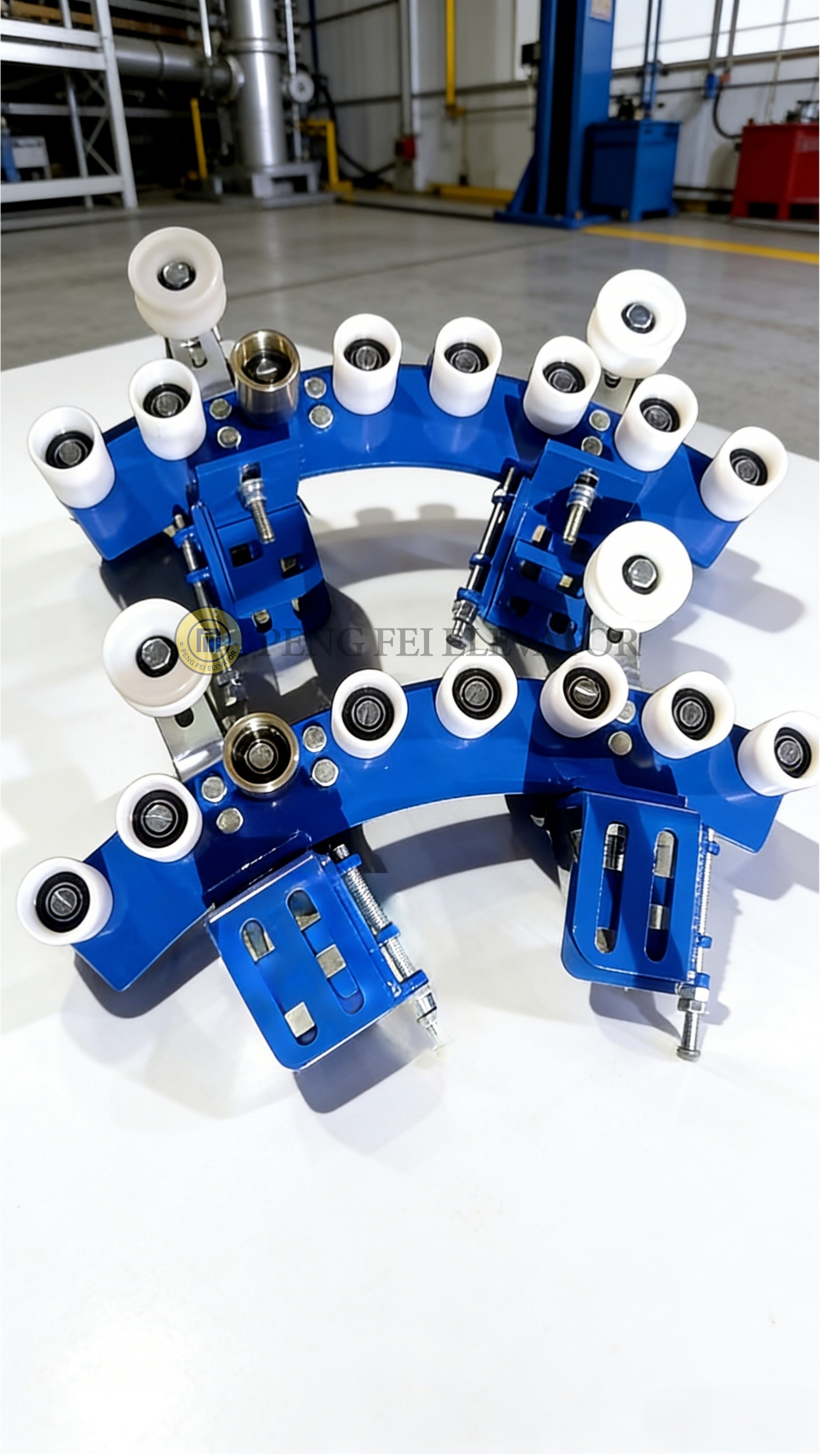
Sliding Guide Shoes vs Roller Guide Shoes
Elevator guide shoes are essential components that guide the elevator car along vertical rails inside the elevator shaft. Two primary types of guide shoes are used in modern elevator systems: sliding guide shoes and roller guide shoes. Each type has unique design characteristics and is suitable for different elevator applications.
Understanding the differences between these two guide shoe designs helps elevator engineers and maintenance professionals choose the most appropriate option for a specific elevator system.
Sliding Guide Shoes
Sliding guide shoes are widely used in many elevator systems, particularly in low- and medium-speed elevators. These guide shoes use a sliding surface made from durable materials such as nylon, polyurethane, or composite engineering plastics.
As the elevator moves, the liner slides directly against the guide rail. The materials used in sliding guide shoes are specifically designed to reduce friction and resist wear.
One advantage of sliding guide shoes is their relatively simple structure. Because they have fewer moving parts, they are easy to install and maintain.
Roller Guide Shoes
Roller guide shoes operate differently from sliding guide shoes. Instead of sliding surfaces, they use rotating rollers that move along the guide rails. These rollers are often made from high-strength materials and may include rubber or polyurethane coatings.
Because the rollers rotate instead of sliding, friction is significantly reduced. This results in smoother elevator operation and lower vibration levels.
Roller guide shoes are commonly used in high-speed elevators found in tall commercial buildings and skyscrapers.
Choosing the Right Guide Shoe
The choice between sliding and roller guide shoes depends largely on elevator speed and system design. Low-speed elevators typically use sliding guide shoes, while high-speed elevators benefit from the smoother performance of roller guide shoes.
Conclusion
Both sliding guide shoes and roller guide shoes play essential roles in elevator systems. Selecting the correct type ensures stable elevator movement, reduced noise, and improved ride comfort.
Our company specializes in the R&D, manufacturing and sales of complete elevators of various types and a full range of core components for elevators and escalators. Our products cover a wide variety of elevator equipment, including high-end villa elevators, passenger elevators, freight elevators, dumbwaiters, etc. Core components for vertical elevators include main engine shock absorbers, car shock absorbers, guide shoes, rope hitches, traction sheaves, etc. Key escalator components include comb plates, side panels, friction wheels, drive wheels, step rollers, tension chains, heavy-duty step chains, pulley assemblies, etc. We can provide one-stop supporting solutions for major elevator and escalator brands at home and abroad.